
Finding Troy Residents Through Records
Start with the most stable fact available. For a current property connection, the Miami County Auditor is the useful first stop. For a named voter, use the statewide tool with the correct county. For a past household, begin with a dated directory, newspaper, or map at the Local History & Genealogy Center. Each route answers a different question. None creates a complete list of people at a Troy address.
Names are only candidate matches. An owner can be different from a current occupant, and a tax mailing address can be different from a property address. A strong Troy residents directory search preserves the parcel number, case number, or dated volume and then checks an independent record. This helps separate people with similar names and keeps a useful historical finding from being mistaken for current residence.
- Search the Miami County Auditor Property Search by owner, parcel, or address when a property connection is known.
- Check the Ohio Voter Lookup with a first name, last name, and Miami County.
- Use the Recorder’s name-first index for recorded land documents, then retain the document or book and page reference.
- For an earlier Troy household, consult the library’s directory, newspaper, map, and microfilm collections.
- When no online route fits, request a specific existing record from the custodian under Ohio public-records rules.
Troy Resident Record Custodians
Troy is the Miami County seat, so several key counters sit in the courthouse and Safety Building district. The Recorder documents recorded land instruments, the Auditor maintains the current parcel anchor, and the Board of Elections handles registration records. The Clerk and Probate Court are separate channels for court and estate matters. For a street-by-street sequence of these records, use the Troy streets resource after identifying the address.
Miami County Auditor
201 W. Main St.
Troy, OH 45373
937-440-5925
Property Search
Miami County Board of Elections
215 W. Main St.
Troy, OH 45373
937-440-3900
Ohio Voter Lookup
City administrative records take a different route. The Troy Clerk of Council accepts focused public-record requests at City Hall, while Planning & Zoning can help identify address-based project records. The City says routine requests normally finish within three business days, although broader requests may need acknowledgment and clarification.
Troy publishes its municipal public-record request route through the Clerk of Council.
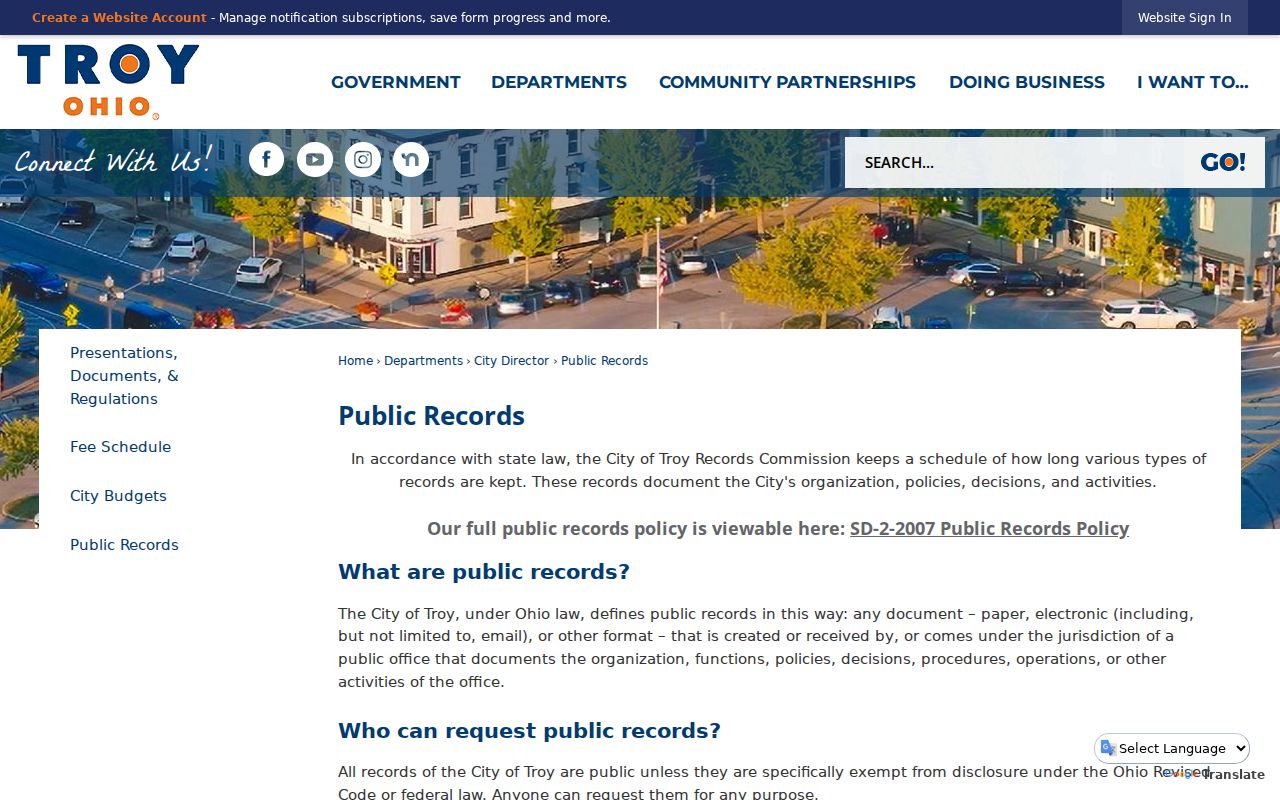
Describe the record, date range, and address or case number precisely so the City can identify responsive existing material.
Troy Parcel Search Fields
The Auditor’s public screen is designed for one fact or several combined filters. A person with a house number can use the address route without guessing a full string. The advanced screen also separates sales and location criteria from residential characteristics. Record the parcel number before moving to maps or deeds, because it is the best local bridge between the current property record and older legal-description material.
| Auditor field | How it works | Local use |
|---|---|---|
| Owner Name | Last name first | Checks a property-owner connection. |
| Parcel Number | Direct text search | Supplies the cross-office parcel anchor. |
| House #, direction, street name, type | Separate address inputs | Finds a Troy street address. |
| Municipal or neighborhood | Advanced location controls | Narrows property geography, not a ZIP directory. |
| Sale date, buyer, seller | Optional sales criteria | Helps place a recorded transfer in time. |
Note: No ZIP filter or online historical coverage-start date was verified for this Auditor screen.
Troy Deeds Use a Name-First Trail
The Recorder’s free AVA search directs users to enter a last or business name, a first name, and then open the NAME link in the result. Images are watermarked. The County cautions that street addresses and parcel numbers do not appear on every recorded instrument, so the Recorder is not a reliable street browser. A party name, document number, legal description, and Tax Map route make a more defensible trail.
Miami County’s Recorder guidance says documents from 1998 forward can be searched online by name or book and page, while 1980 through 1998 are searched by book and page. Older book images and index material need era-specific work, Laredo access, or staff help. A failed digital name search is not proof a Troy record does not exist.
Miami County’s Recorder instructions are shown in this search screen.
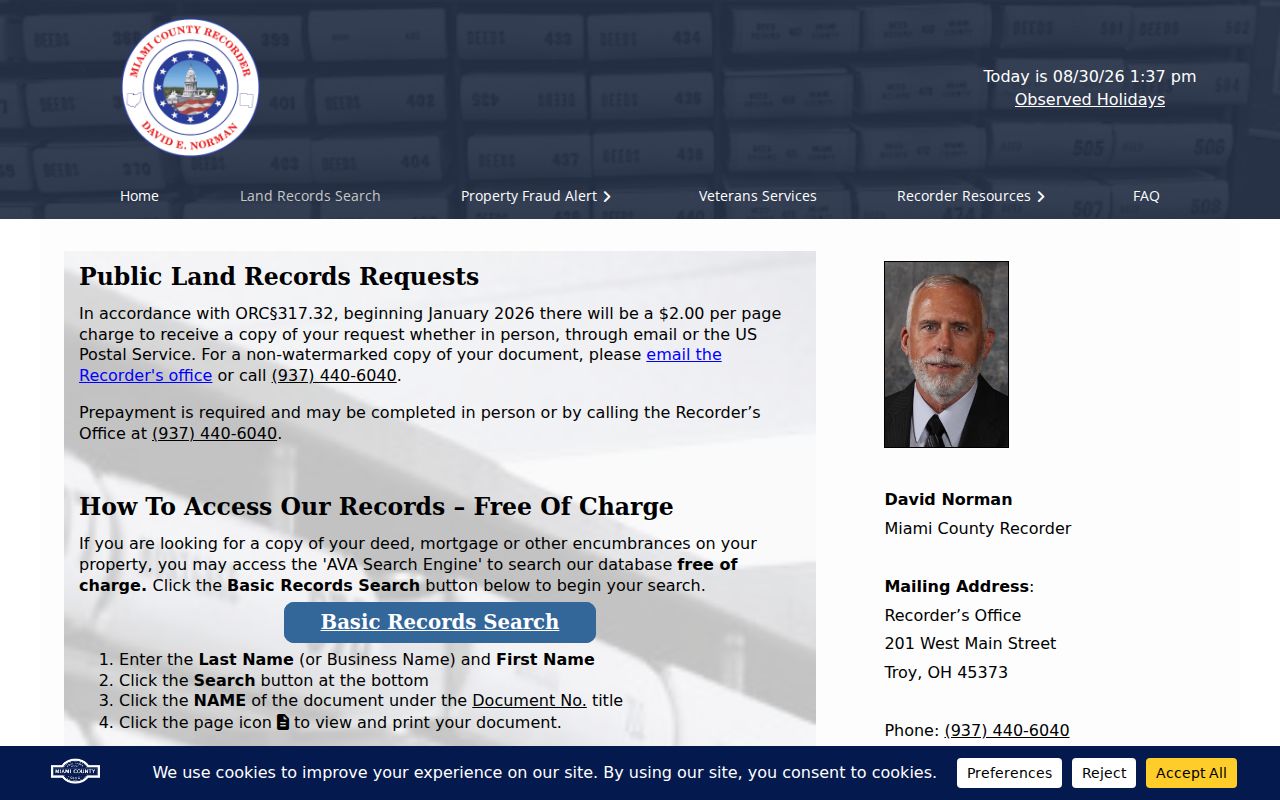
It supports the local rule to switch from a street question to a party and document trail when dealing with land records.
Current Troy Resident Directory Sources
A Troy residents directory is assembled from narrow public sources, each with a different scope. The table separates what a source can support from what it cannot establish. A search that needs one person verified across records belongs on the resident lookup resource, rather than in a broad household list.
| Record source | What it can show | Custodian | Access route |
|---|---|---|---|
| Current parcel record | Owner and property connection | Miami County Auditor | Free public search |
| Registration lookup | Narrow named voter and precinct verification | Ohio Secretary of State | Name plus county tool |
| Recorded instruments | Parties to land documents | Miami County Recorder | Free AVA, books, or request |
| Probate and court records | Case or estate relationship | County courts | Portal, counter, or copy request |
| City staff directory | Public City employee contacts | City of Troy | Limited official directory |
Property records identify land ownership, not every resident. The voter tool is not a street-browse roster. City staff contacts are not a local resident roll. These limits are part of an accurate search, not missing pieces to fill with assumptions.
Troy Voter Records Have Limits
Ohio’s voter lookup uses a name and county to verify an individual registration or precinct connection. R.C. 3503.13 treats registration forms and the statewide voter database as public records under the Ohio Public Records Act, but it protects items such as Social Security and identification numbers, telephone numbers, email, confidential voter information, and qualifying protected-worker addresses. A result or no result cannot be expanded into a list of everyone at a Troy address.
For dated county registration data, the Ohio DATA Act File Search offers daily snapshots. It describes county-produced 4 p.m. snapshots and at least 22 months of retention after an election. A custom package asks for a county and may be delivered by expiring email link. The Miami Board of Elections is the fallback for a focused request when a portal option does not fit.
Ohio’s voter lookup is the state channel for a narrowly matched registration check under Ohio’s public-records framework.
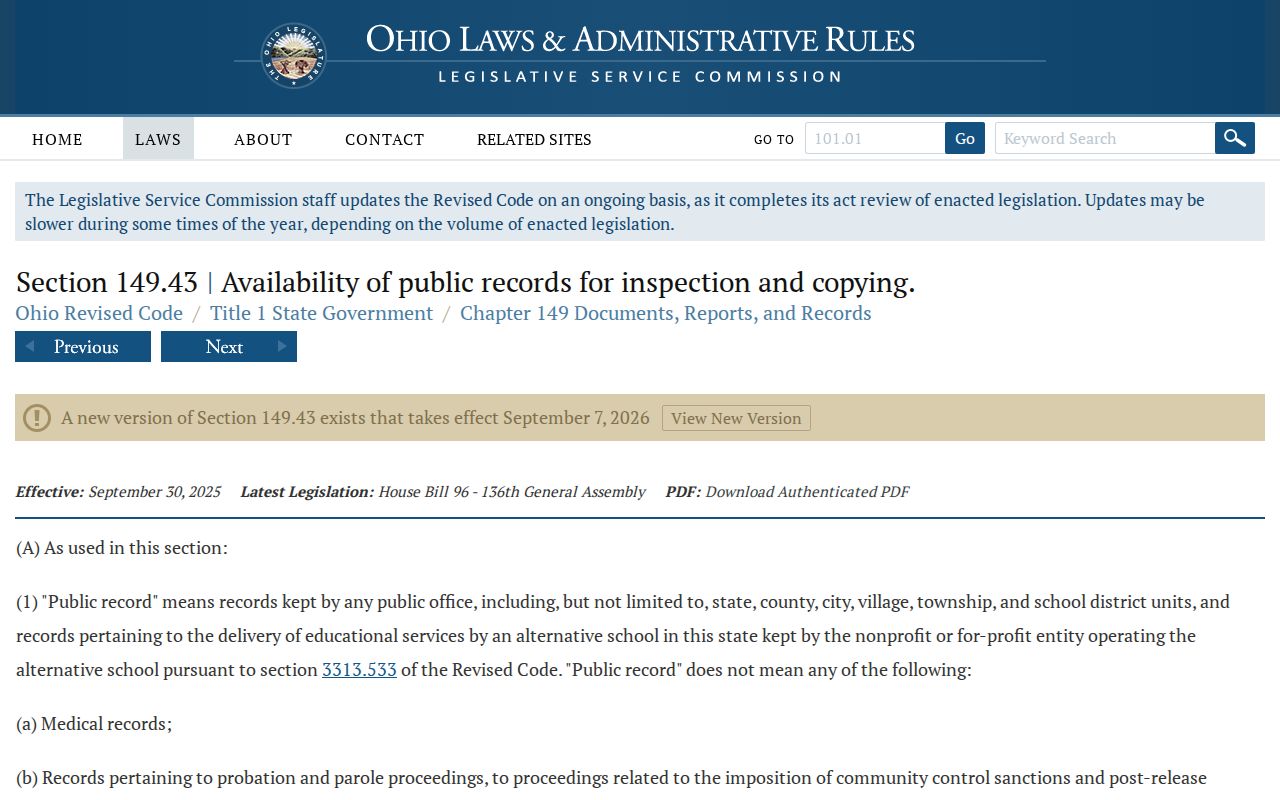
The governing access framework is Ohio Revised Code R.C. 149.43, with redactions and record-specific exceptions still applying.
Troy Court and Probate Name Checks
The Miami County CourtView gateway is the official online route for Common Pleas and Municipal Court access, but its public eServices route was CAPTCHA-gated during research. Do not infer fields or a clear record from the gate. The Clerk of Courts maintains the official filing, docketing, indexing, and preservation functions and provides a counter fallback for a specific case or record request.
Probate CaseLook offers a different name, case-number, filing-date, and case-type route after its disclaimer and CAPTCHA. Its form exposes estate, guardianship, marriage, civil, miscellaneous, and trusteeship categories, with filing-year choices back to 1978. Court information can lag filings. Verify a needed record with Probate Court rather than treating an online screen as a certified answer.
The CourtView access gateway is a useful reminder that online case access can have a real completion barrier.
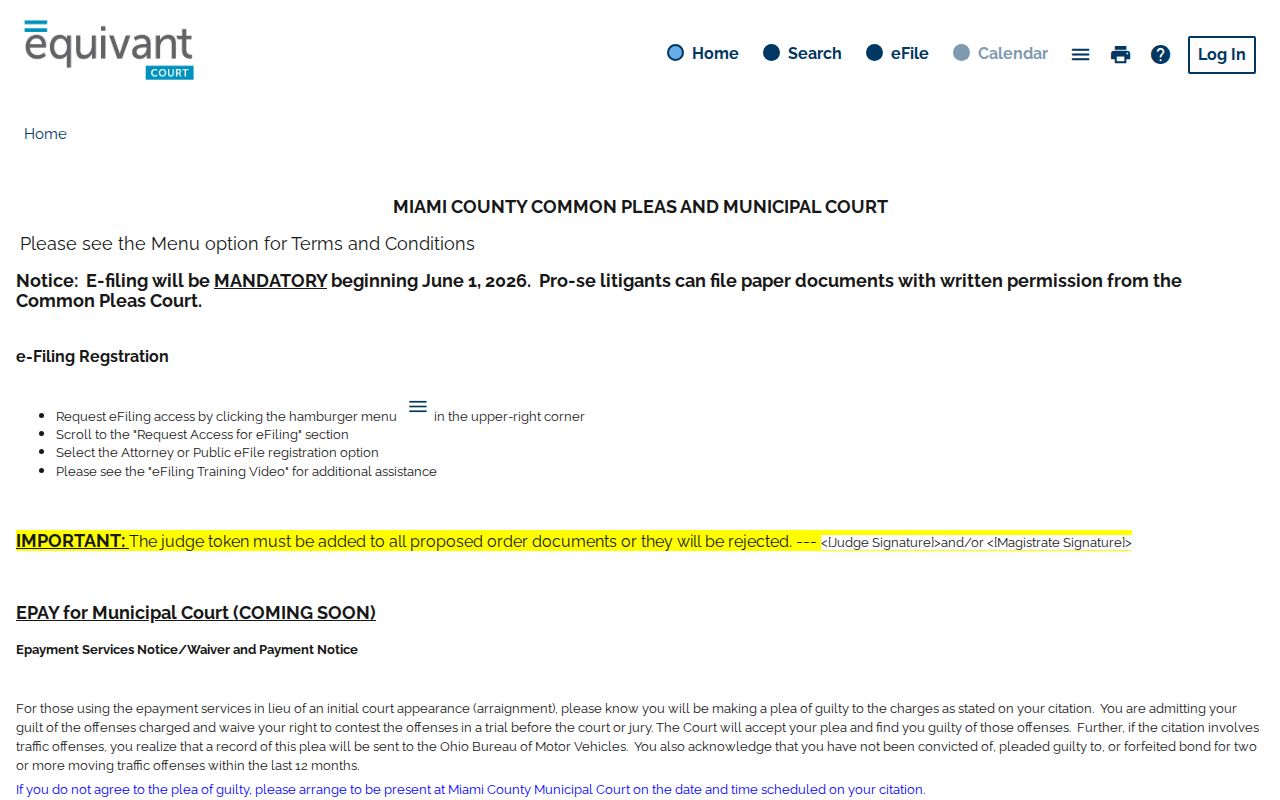
For federal matters, PACER serves the Southern District of Ohio and should not be confused with Miami County CourtView.
Troy Vital Records by Custodian
Miami County Public Health is the local birth and death registrar, while Probate Court keeps local marriage records and older genealogical material. Ohio does not use a simple age-based closure rule for all vital records. Under R.C. 3705.23, a signed application and fee generally permit a certified vital copy unless a record is specifically nonpublic. Adoption and substitute records have separate protections.
Miami County Public Health’s application states a $24 fee per certified birth or death copy and allows mail, fax, email, in-person, or online service channels. For historical death research, the Ohio History Connection death index is an index and order aid, not a substitute for a certified record. A death certificate Social Security number is withheld for its first five years unless an eligible requester proves identity.
Miami County Probate Court provides one official route for local marriage and estate research.
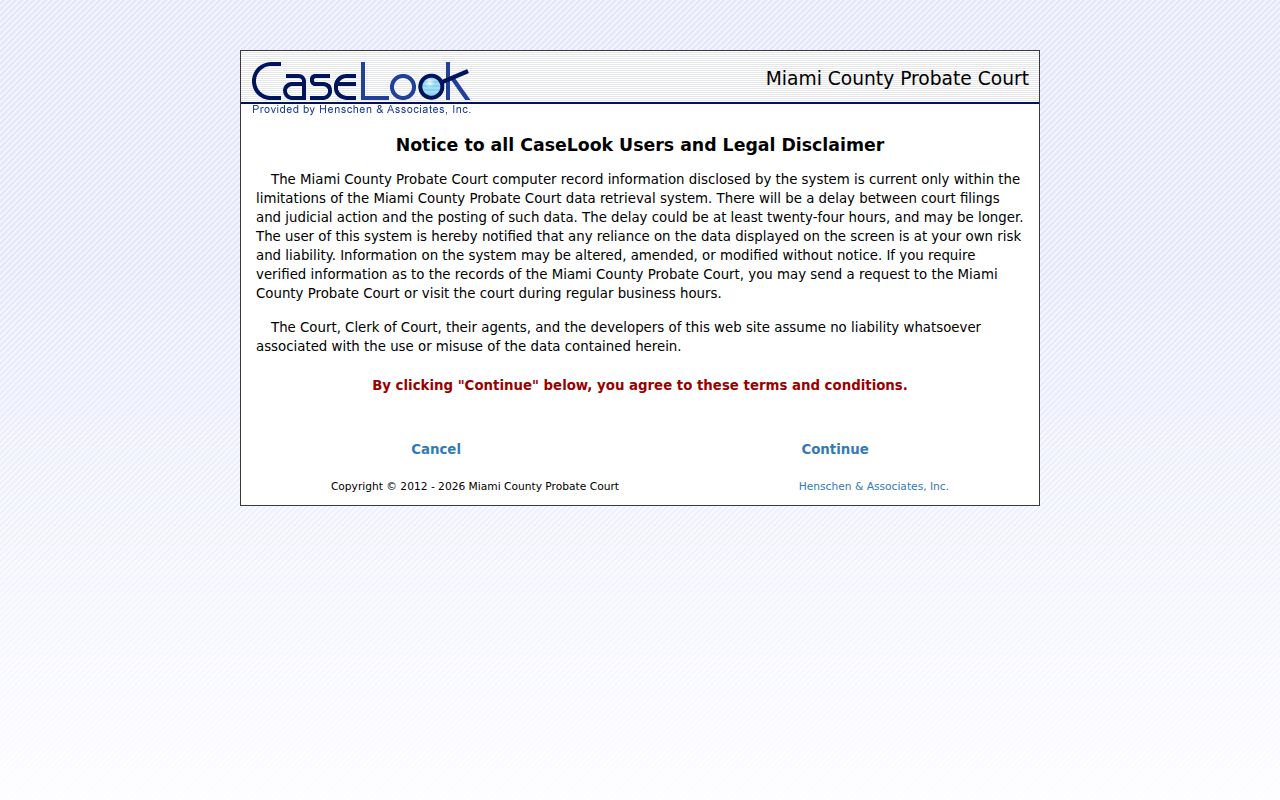
Its legal notice and access controls reinforce the need to request verification from the Court when a particular record matters.
Troy Historical Resident Directories
The Troy-Miami County Public Library Local History & Genealogy Center is the practical historical desk for Troy. Its 2025 shared move with Troy Historical Society created the current Center at the Hobart Government Center. Books, maps, manuscripts, wills, land records, microfilm, public computers, and staff assistance give an older address a route beyond a web search.
The catalog verifies particular Troy directory items, not one continuous run. It identifies Polk volumes for 1962 and 1982 at Main Library-Dayton, and a 2002 Troy Library reference copy, all noncirculating. Historic Troy newspapers can be searched in-house across 1828 to 2014. The full collection details and a careful entry-reading method belong in the Troy city directory collections.
Troy’s local history room is the appropriate place for a directory shelf, microfilm, or map question that has no verified online index.
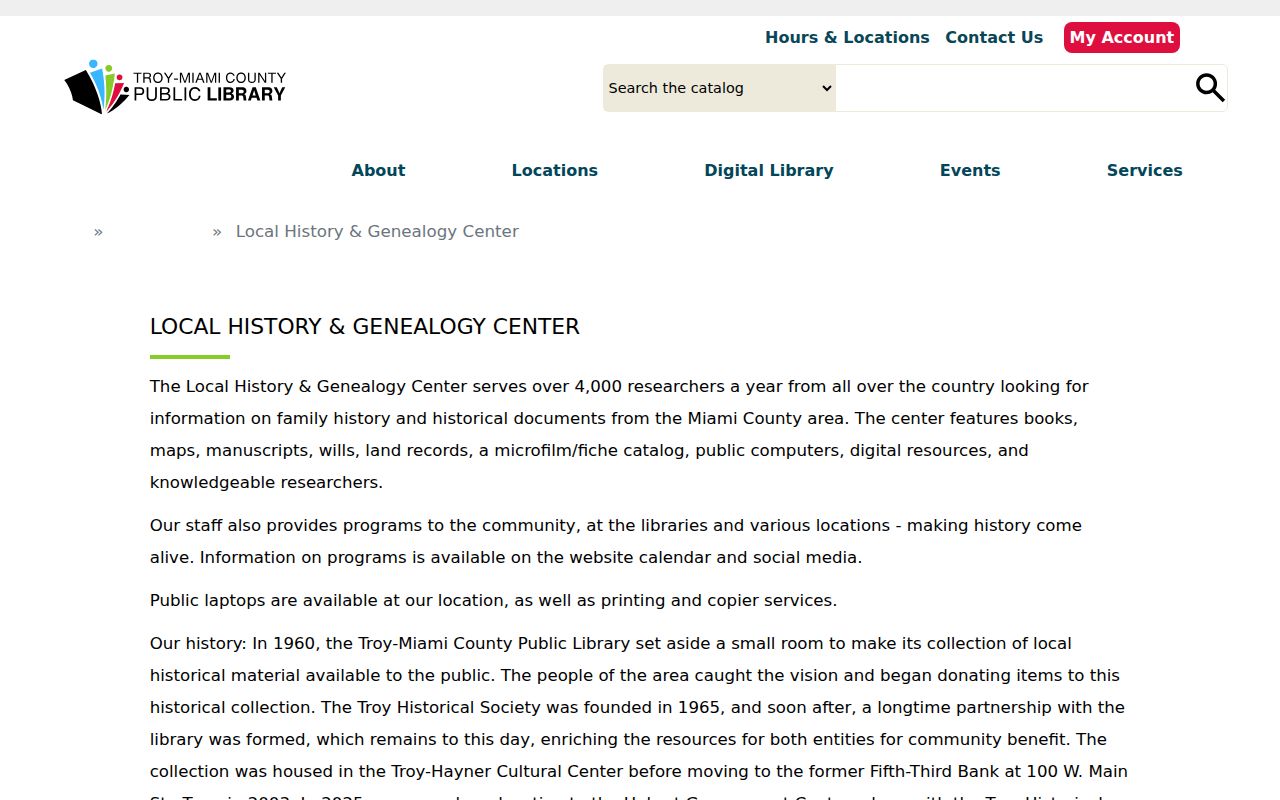
A dated directory or newspaper entry gives historical context and needs corroboration before it is used to describe a current household.
Troy’s 1807 Record Trail
Miami County’s 1807 formation and Troy’s early platting explain why downtown records often rely on original lots, historic street terms, and legal descriptions. The Recorder’s books begin in 1807, but their online search paths vary by era. Common Pleas estate inventory books for 1807 through 1821 survive, yet the Historical Society describes them as fragile, appointment-only, and not photocopied. Digital copies can be obtained through Local History.
This is a useful local records story: a gap in a digital result may call for a book image, a Geographic Index, a tax map, or a staff request. The Recorder also reports that digitized Name Index Books omit 1917 through 1920. For that period, a legal description and Geographic Index are better next steps than concluding that a record disappeared.
Safe Troy Record Use
Official records work best for family history, a carefully documented estate question, civic transparency, or checking a suspicious solicitation with its true custodian. Ohio Safe at Home participants, confidential voters, sealed court files, minors, utility customers, and DMV data are not information gaps to reconstruct. Use only lawful personal research and do not publish or pursue protected location information.
Use Troy records for lawful personal research only. Do not use them to stalk, harass, threaten, or harm anyone, and do not infer a protected address from other records.
The Recorder’s free Property Fraud Alert can notify an enrolled owner about a monitored recording. Ohio’s official unclaimed-funds search is also free. Verify unexpected messages through an agency’s direct contact, not through a number supplied in the message.
The County jail roster is a limited custody source, not a Troy residents directory.
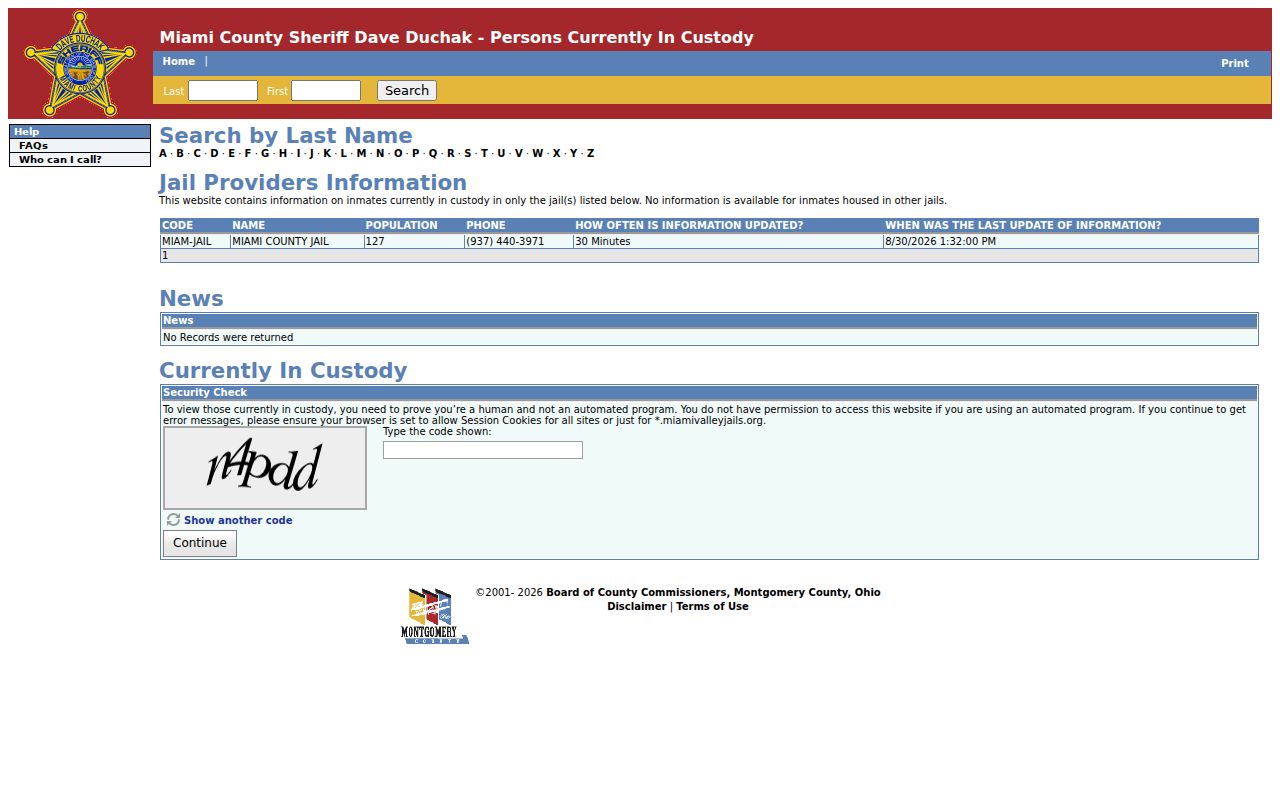
Its narrow scope shows why an official roll must be used only for the question it actually answers.
Troy Records Terms to Know
Short labels can make a Troy record look more conclusive than it is. Keeping the terms straight helps a searcher ask the right office for the right item.
- Parcel
- A county identifier for a piece of land, useful as the bridge between the Auditor, Tax Map Department, and recorded instruments.
- Index
- A finding tool that points to a record; it is not always the scanned document or a certified copy.
- Criss-cross directory
- An address-arranged directory. No verified Troy run or year was located, so ask Local History staff rather than assuming one exists.
- Situs address
- The physical address for land. It can differ from a tax correspondence address and does not identify every occupant.
Troy Maps Connect Addresses to Lots
The Troy Map Gallery gives an address question local geography that a directory entry cannot supply. It links to My Property, street-grid, subdivision, historic-district, ward, zoning, and annexation-by-year maps. The County Tax Map Department keeps the lot, plat, survey, and aerial material that can bridge a current house number to the legal-description language on an older instrument.
Use a map to understand the parcel and its time period, not to make a household claim. The City’s joined parcel layer distinguishes a property address from owner-mail fields and includes context such as tax district, school, City or Township, sale, and value data. Field availability is not guaranteed for every parcel. The City app itself was not verified as an adjacent-parcel or radius-search tool, so an address question should move one parcel at a time through the official record trail.
Note: A Troy mailing ZIP, map label, or owner-mail field is not by itself proof of City jurisdiction or current residency.
Troy Requests When Portals Stop
Ohio Revised Code 149.43 requires public offices to make public records available promptly and within a reasonable period, while allowing lawful redaction and exceptions. A useful request names the record type, a narrow date range, the address, parcel, person, or case number already known, and the preferred existing medium. Asking an office to create a new resident report is not the same as asking for a record it holds.
For City administrative records, contact the Troy Clerk of Council at public.records@troyohio.gov or 937-335-1725. The City permits in-person inspection and pickup, mail, or email copies. Court, Probate, Recorder, Auditor, and Board of Elections requests should go to their own custodians because each holds different material and applies its own record rules. A narrow request is also safer because it lets staff separate releasable information from confidential material.