
Finding Troy Residents Through Records
Anchor the search on the most stable fact. A current property question points to the Miami County Auditor. A named voter points to the statewide registration tool set to the right county. A past household points to the Local History & Genealogy Center. There, dated directories, newspapers, and maps can place a family in time. Each route answers one question. None of them produces a complete list of people at a Troy address.
Treat every name as a candidate, not a conclusion. An owner can differ from a current occupant. A tax mailing address can differ from the property address. A careful Troy residents directory search keeps the parcel number, case number, or dated volume handy. It then tests the match against an independent record. That habit separates neighbors with similar names. It also keeps a historical finding from being mistaken for present-day residence.
- Search the Miami County Auditor Property Search by owner, parcel, or address when a property connection is known.
- Check the Ohio Voter Lookup with a first name, last name, and Miami County.
- Use the Recorder’s name-first index for recorded land documents, then retain the document or book and page reference.
- For an earlier Troy household, consult the library’s directory, newspaper, map, and microfilm collections.
- When no online route fits, request a specific existing record from the custodian under Ohio public-records rules.
Troy Resident Record Custodians
Troy is the Miami County seat. Several key counters cluster in the courthouse and Safety Building district. The Recorder documents recorded land instruments. The Auditor maintains the current parcel anchor. The Board of Elections holds registration records. Court and estate matters run through the Clerk and Probate Court instead. Once an address is in hand, the Troy streets resource walks these records street by street.
Miami County Auditor
201 W. Main St.
Troy, OH 45373
937-440-5925
Property Search
Miami County Board of Elections
215 W. Main St.
Troy, OH 45373
937-440-3900
Ohio Voter Lookup
City records follow a separate route. The Troy Clerk of Council takes focused public-record requests at City Hall. Planning & Zoning can point to address-based project files. Routine requests normally finish within three business days, the City says. Broader requests may need an acknowledgment and some clarification first. Troy publishes its municipal public-record request route through the Clerk of Council.
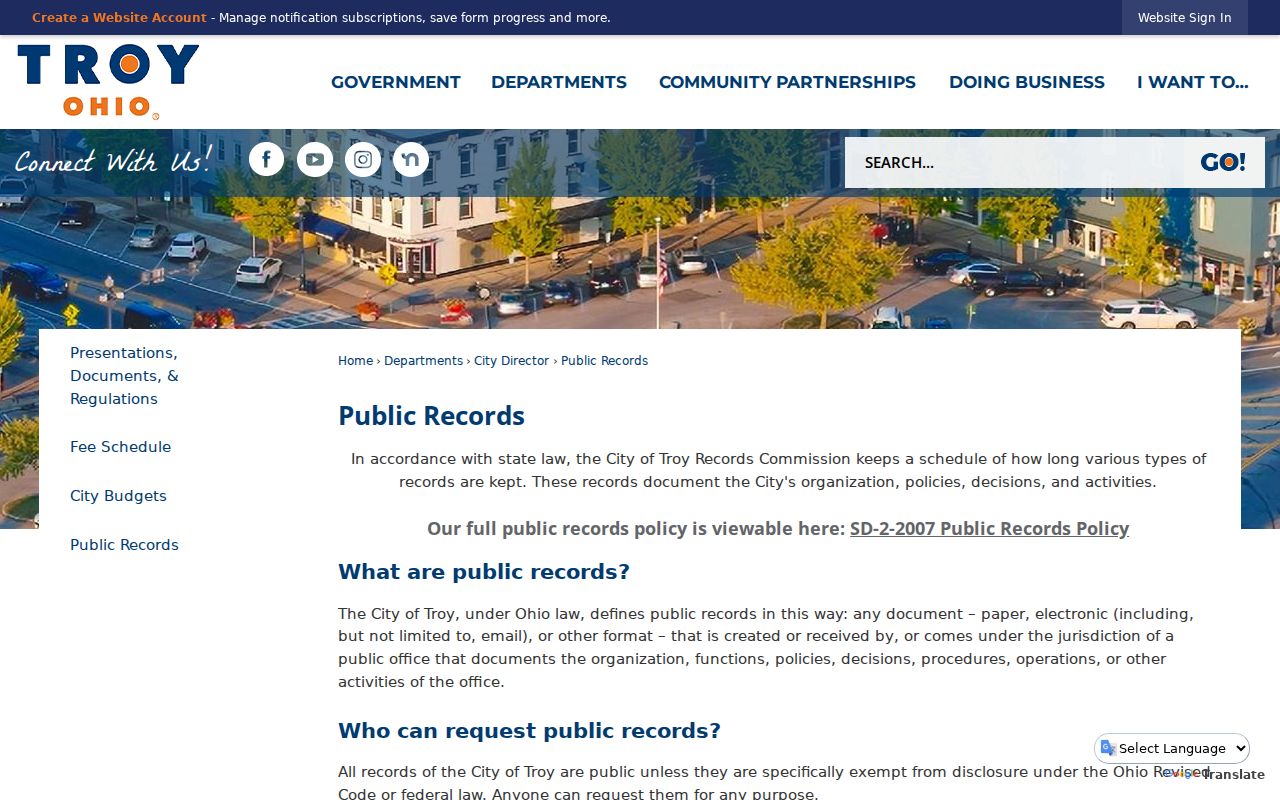
Name the record, the date range, and the address or case number precisely. That specificity lets the City locate the responsive material without guesswork.
Troy Parcel Search Fields
The Auditor's public screen is built around one fact or a few combined filters. A house number alone works through the address route. No full string needs guessing. The advanced screen keeps sales and location criteria separate from residential characteristics. Grab the parcel number before moving on to maps or deeds, because that number is the best bridge between the current property record and older legal-description material.
| Auditor field | How it works | Local use |
|---|---|---|
| Owner Name | Last name first | Checks a property-owner connection. |
| Parcel Number | Direct text search | Supplies the cross-office parcel anchor. |
| House #, direction, street name, type | Separate address inputs | Finds a Troy street address. |
| Municipal or neighborhood | Advanced location controls | Narrows property geography, not a ZIP directory. |
| Sale date, buyer, seller | Optional sales criteria | Helps place a recorded transfer in time. |
Note: The Auditor publishes no ZIP code directory filter or online coverage-start date for this screen.
Troy Deeds Use a Name-First Trail
The Recorder’s free AVA search starts with names, not streets. Enter a last or business name. Add a first name, then open the NAME link on the result. Images carry watermarks. The County itself cautions that street addresses and parcel numbers are missing from many recorded instruments. So the Recorder is a poor tool for browsing a Troy street. A party name, a document number, a legal description, or a Tax Map route builds a far more defensible trail.
Miami County’s Recorder guidance splits the timeline. Documents from 1998 forward can be searched online by name or by book and page. But 1980 through 1998 are searched by book and page only. Older book images and index material call for era-specific digging. Laredo access or help from staff may be needed. And remember: a failed digital name search never proves a Troy record is absent. Miami County’s Recorder instructions appear in this search screen.
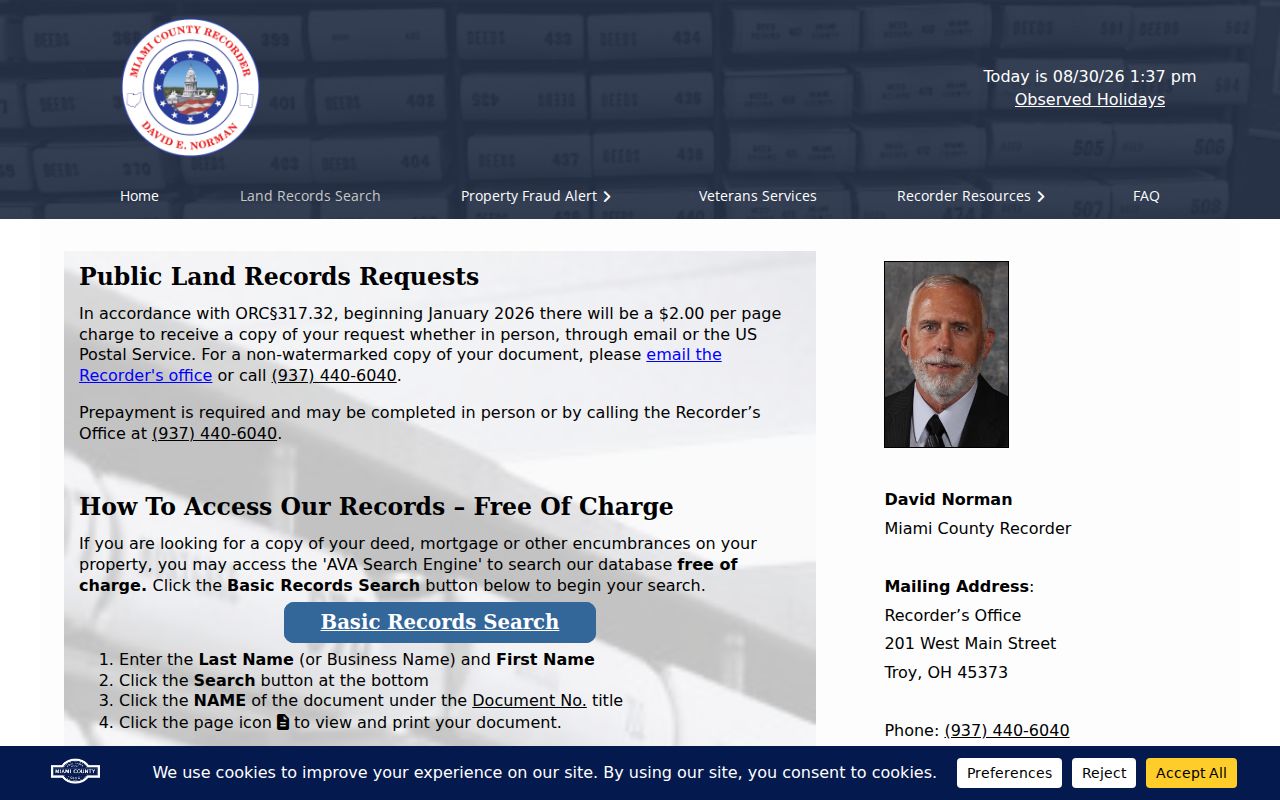
That is why land-record work in Troy rewards a switch. Move from the street question to a party and document trail.
Current Troy Resident Directory Sources
A Troy residents directory comes together from narrow public sources. Each source carries its own scope. The table separates what a record can support from what it cannot establish. It keeps expectations honest. When the task is verifying one person across records, the resident lookup resource fits better than any broad household list. The resident lookup resource serves that goal well.
| Record source | What it can show | Custodian | Access route |
|---|---|---|---|
| Current parcel record | Owner and property connection | Miami County Auditor | Free public search |
| Registration lookup | Narrow named voter and precinct verification | Ohio Secretary of State | Name plus county tool |
| Recorded instruments | Parties to land documents | Miami County Recorder | Free AVA, books, or request |
| Probate and court records | Case or estate relationship | County courts | Portal, counter, or copy request |
| City staff directory | Public City employee contacts | City of Troy | Limited official directory |
Property rolls show land ownership, not every resident. The voter tool is not a street-browse roster, and city staff contacts are not a resident roll. These limits shape an accurate search rather than leaving gaps to fill with assumptions.
Troy Voter Records Have Limits
Ohio’s voter lookup takes a name and a county. It verifies a single registration or precinct connection. R.C. 3503.13 makes registration forms and the statewide voter database public records. This holds under the Ohio Public Records Act. It still shields Social Security and identification numbers. Phone numbers, email, confidential voter information, and qualifying protected-worker addresses stay protected too. One match, or none at all, cannot be stretched into a roster. It does not cover everyone at a Troy address.
For dated county registration data, the Ohio DATA Act File Search posts daily snapshots. It documents county-produced 4 p.m. snapshots. It also documents at least 22 months of retention after an election. A custom package requires a county choice and may arrive through an expiring email link. When no portal option fits a focused request, the Miami Board of Elections is the fallback. Ohio’s voter lookup remains the state channel for a narrowly matched registration check. That check runs under Ohio’s public-records framework.
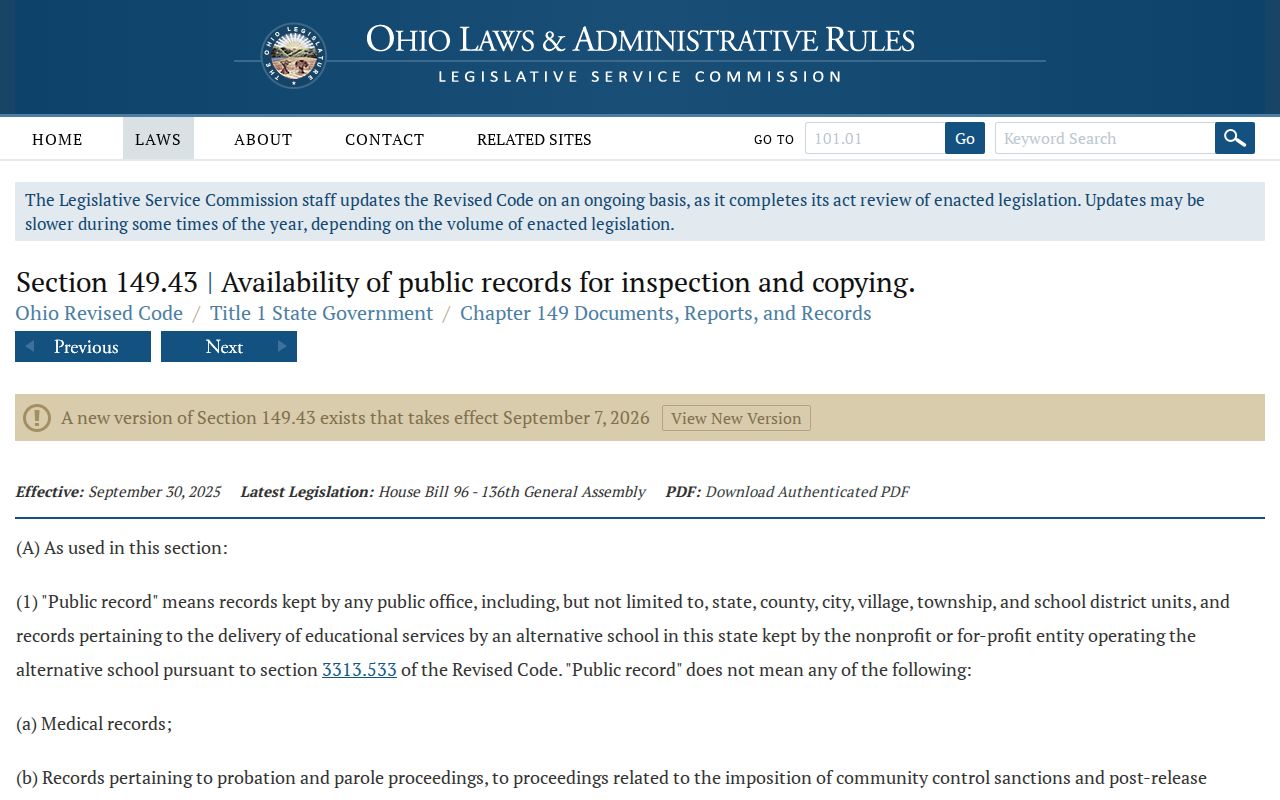
The governing access framework is Ohio Revised Code R.C. 149.43, with redactions and record-specific exceptions still applying.
Troy Court and Probate Name Checks
Miami County CourtView is the official online gateway for Common Pleas and Municipal Court access. Its public eServices route sits behind a CAPTCHA gate. Do not infer fields or a clean record from the barrier alone. The Clerk of Courts keeps the official filing, docketing, indexing, and preservation functions. For a specific case or record request, the clerk's counter is the fallback.
Probate CaseLook takes a different route. After its disclaimer and CAPTCHA, a form offers name, case-number, filing-date, and case-type searches. Categories span estate, guardianship, marriage, civil, miscellaneous, and trusteeship. Filing-year choices reach back to 1978. Court information can lag behind filings. Verify a needed record with Probate Court rather than treating an online screen as a certified answer.
The CourtView access gateway is a useful reminder. Online case access can have a real completion barrier.
Federal matters run through PACER, which serves the Southern District of Ohio. Keep it separate from Miami County CourtView.
Troy Vital Records by Custodian
Miami County Probate Court handles local marriage records along with older estate and genealogical material. Miami County Public Health serves as the birth and death registrar. Ohio's vital records rules are not a simple age cutoff. Under R.C. 3705.23, most certified copies follow a signed application and fee unless a record is expressly nonpublic. Adoption and substitute records carry their own protections. A Troy residents directory lookup for a birth or death usually lands at one of these two custodians.
The health district charges $24 per certified birth or death copy. Applications go through mail, fax, email, in person, or online. For historical death research, the Ohio History Connection death index works as a finding aid. It is not a certified record itself. Social Security numbers on death certificates stay withheld for five years unless an eligible requester proves identity.
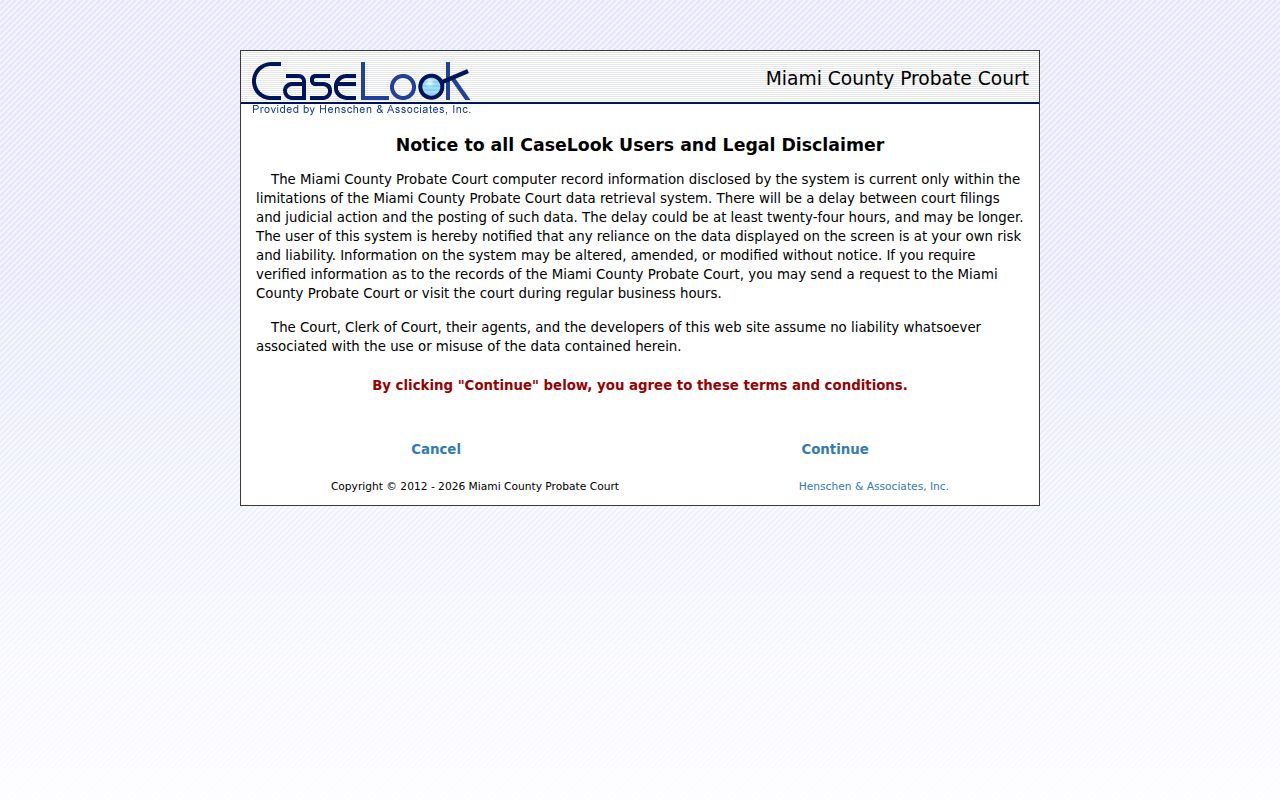
The Court's legal notice and access limits are firm. Anyone with a specific record at stake should ask the Court directly for verification before relying on a past residents listing or other secondary source.
Troy Historical Resident Directories
The Troy-Miami County Public Library Local History & Genealogy Center serves as the practical historical desk for Troy. In 2025 it moved in with the Troy Historical Society. That shared move created the current Center at the Hobart Government Center. Books, maps, manuscripts, wills, land records, and microfilm sit alongside public computers and staff help. That gives an older address a route no web search can match.
The catalog confirms individual Troy directory items rather than one continuous run. Polk volumes for 1962 and 1982 are held at Main Library-Dayton. The Troy Library keeps a noncirculating 2002 reference copy. Historic Troy newspapers span 1828 to 2014 and are searchable in-house. Full collection details and careful entry-reading guidance appear in the Troy city directory collections. Troy's local history room answers directory shelf, microfilm, and map questions. No verified online index covers those shelves.
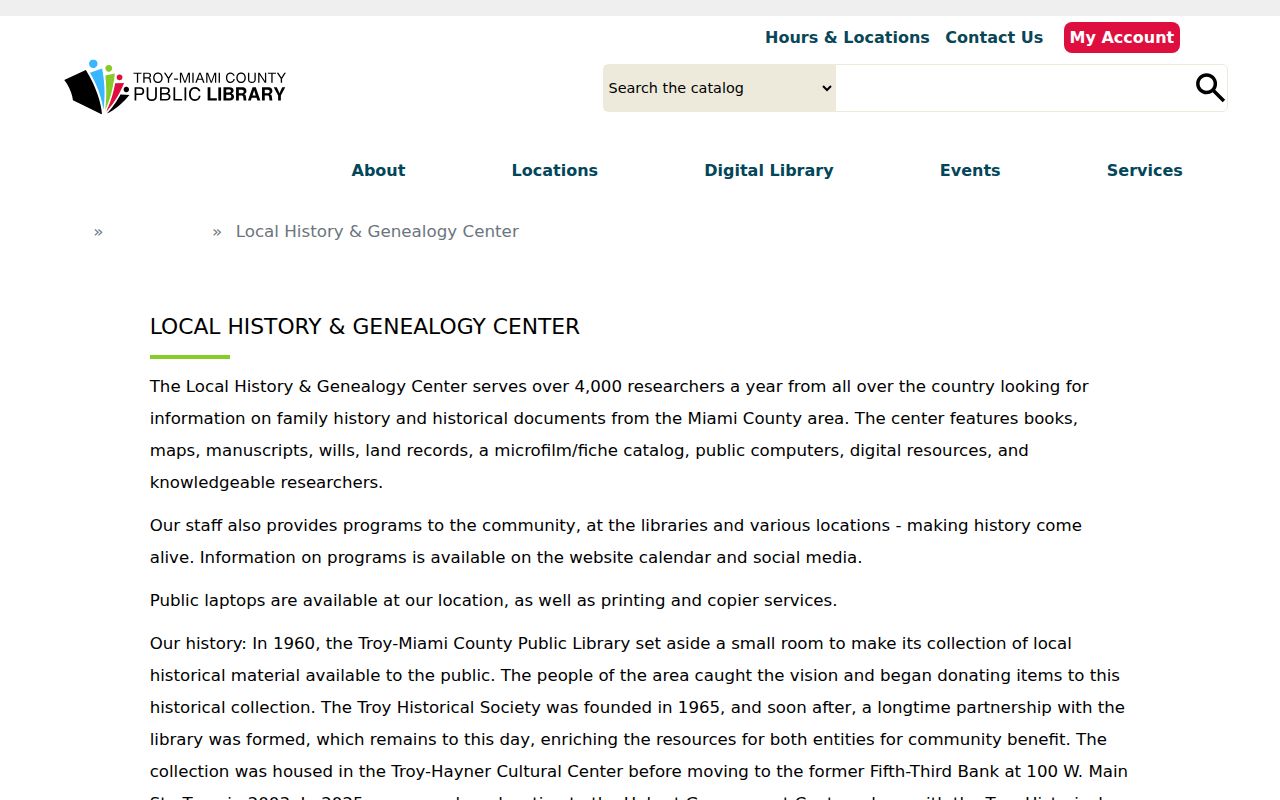
A dated directory or newspaper entry supplies historical context only. Corroborate it before treating it as proof about a current household or past residents of Troy.
Troy’s 1807 Record Trail
Troy’s paper trail starts early. Miami County was formed in 1807. It was the same year the Recorder’s books begin. Downtown parcels still trace back to original lots, old street names, and lengthy legal descriptions. That history shapes any Troy residents directory search today. Digitized paths simply do not line up across every era. The Common Pleas estate inventory books from 1807 through 1821 survive. But the Historical Society keeps them fragile, appointment-only, and off the photocopier. Local History can supply digital copies instead.
A missing digital result rarely means a missing record. The Recorder’s own digitized Name Index Books skip 1917 through 1920. So a legal description paired with the Geographic Index is the smarter route for those years. A tax map or a staff request can close the gap too. Treat a blank result as a prompt, not a verdict.
Safe Troy Record Use
Official Troy records earn their keep in honest pursuits: family history, a documented estate question, civic transparency, or confirming a suspicious solicitation with its true custodian. Some records are shielded for good reason. Ohio Safe at Home participants, confidential voters, sealed court files, minors, utility customers, and DMV data are not gaps for anyone to reconstruct. Keep research lawful and personal. Do not publish or chase protected location information.
Use Troy records for lawful personal research only. Do not use them to stalk, harass, threaten, or harm anyone, and do not infer a protected address from other records.
Ohio keeps several free safeguards worth knowing about. The Recorder's Property Fraud Alert costs nothing to enroll in. It can warn a monitored owner when a recording hits the file. The state's official unclaimed-funds search is free too. If a message about either one catches you off guard, call the agency at its published number. Never use a number inside the message. The County jail roster answers only a narrow custody question. It is no substitute for a Troy residents directory.
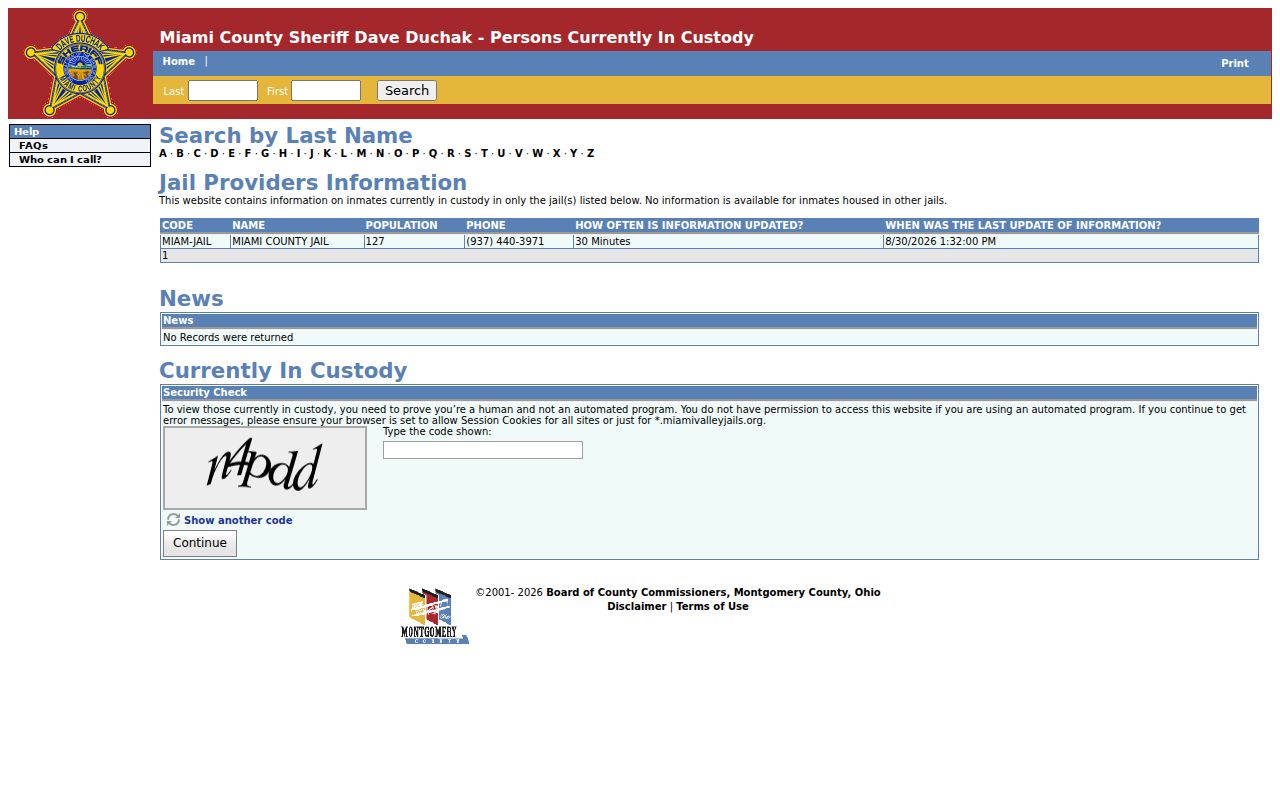
That narrow scope is the lesson. Use an official roll only for the question it truly answers.
Troy Records Terms to Know
A short label can make a Troy record seem more conclusive than it is. Getting the terms straight means you ask the right office for the right item.
- Parcel
- A county identifier for a piece of land, useful as the bridge between the Auditor, Tax Map Department, and recorded instruments.
- Index
- A finding tool that points to a record; it is not always the scanned document or a certified copy.
- Criss-cross directory
- An address-arranged directory. No verified Troy run or year was located, so ask Local History staff rather than assuming one exists.
- Situs address
- The physical address for land. It can differ from a tax correspondence address and does not identify every occupant.
Troy Maps Connect Addresses to Lots
Maps put an address question in local geography, something a directory entry alone cannot do. The Troy Map Gallery links to My Property. It also links to street-grid, subdivision, historic-district, ward, zoning, and annexation-by-year maps. For lot, plat, survey, and aerial material, the County Tax Map Department holds the goods. That is often the bridge. It connects a current house number to the legal-description wording on an older instrument.
Treat a map as context for the parcel and its era. A household claim needs the record trail itself. The City's joined parcel layer separates a property address from owner-mail fields. It also layers in tax district, school, City or Township, sale, and value data. Not every parcel carries every field. The City app offers no adjacent-parcel or radius search. So an address question moves one parcel at a time through the official record trail.
Note: A Troy mailing ZIP, map label, or owner-mail field alone does not prove City jurisdiction. It also does not prove current residency.
Troy Requests When Portals Stop
Ohio Revised Code 149.43 obliges public offices to produce public records promptly. That production must happen within a reasonable period. Lawful redactions and exceptions still apply. A strong request names the record type and a tight date range. It should include any address, parcel, person, or case number already in hand, plus the existing medium you prefer. Asking an office to build a new resident report is different from asking for a record it actually holds.
For City administrative records, contact the Troy Clerk of Council. The office can be reached at public.records@troyohio.gov or 937-335-1725. The City allows in-person inspection and pickup, mail, or email copies. Court, Probate, Recorder, Auditor, and Board of Elections requests belong with their own custodians. Each holds different material and applies its own record rules. A narrow request is also safer, since staff can separate releasable information from confidential material.